
Share your screen, ask a question: vision in Microsoft 365 Copilot

Some questions are hard to put into words. What does this error message mean? What is this chart telling me? When am I next meeting the person who has just emailed me? Since the summer, you’ve been able to show Copilot what you mean instead: share your screen during a voice chat, ask out loud, and Copilot answers out loud too.

Microsoft calls the feature vision. We tried it out, and this article shows how to start it, what Copilot can see, and how to get it to bring in your emails, calendar, and files as well.

 

Info Benefit: Ask about what’s on screen
UseCase UseCase: Explaining and looking things up
Zeit Reading time:
3 min
Schwierigkeit Difficulty: Beginner

Vision isn’t brand new. Microsoft rolled it out between late June and late July 2026, but plenty of people missed it—us included—because it is tucked away in voice chat. That is the only place you can share your screen; typed chat doesn’t offer it.

On a shared screen, Copilot can make out text, tables, charts, and app interfaces. What makes it more than an image reader is that it can connect what it sees with your work data. In our test, we opened an email from a colleague, pointed at her name with the mouse, and asked, “When’s my next meeting with this person?” Copilot gave the right date from our calendar.

It won’t go and look things up unprompted, though. When we pointed at a file and asked what was in it, Copilot recognised the file name but knew nothing about the contents. Only when we explicitly asked it to find the file in our work data did it summarise it. In short, Copilot sees what is on your screen—anything beyond that, you have to ask it to look up.

  1. Open the Microsoft 365 Copilot app on Windows or in your browser and go to Chat.
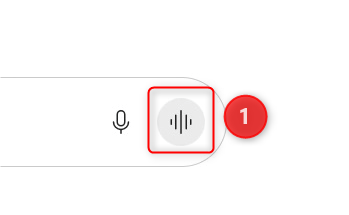
  2. Start a voice chat—with the voice chat button in the prompt box, the Copilot key on your keyboard, or the shortcut Windows key + C.
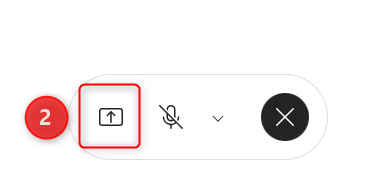
  1. Once the voice chat is running, a small bar with a microphone appears. Select the arrow icon on the left (Start Screen Share), then choose whether to share your whole screen or just one window. A notice shows that sharing is on.
  1. Switch to the window you want to talk about, and give Copilot a moment before you ask.
  2. Ask your question out loud. If you want Copilot to draw on your emails, calendar, or files, say so explicitly—for example, “Find this file in my work data and tell me what’s in it.”
  3. Select Stop sharing to end screen sharing. The voice chat carries on until you close it with the X.

Microsoft says it works much the same way on a phone: start a voice chat in the Copilot app and tap the camera icon. Copilot then sees whatever your camera sees—a business card, a printout, or a whiteboard, for example.

  • It uses up your voice allowance: vision only runs in voice chat, so it counts towards your daily voice chat limit. The app warns you when you are getting close.
  • What it can’t do: Copilot can’t read videos or animated GIFs, won’t click anything for you, and doesn’t remember earlier sessions. If you switch windows too quickly, its answer may be about the wrong screen.
  • Copilot sees what you share: if you share your whole screen, Copilot can see everything else that is open on it too. When only one app matters, share just that window. Microsoft deletes the session’s audio and video data after 48 hours.
  • No share button? Organisations can switch off screen and camera sharing; voice chat still works without it. On a phone, the Copilot app also needs permission to use your camera.
  • Make it clear what you mean: if there are several names or figures on screen, point at the one you mean with the mouse, so that “this person” or “this number” is unambiguous. In our test, that is how Copilot picked out the right file among several in File Explorer.
  • Use it where typing is a chore: vision earns its keep with things that are awkward to describe—an error message, an unfamiliar menu, a chart full of numbers. Rather than copying it all out, just show it.

Vision doesn’t so much change what Copilot can do as how you ask it: instead of describing what is in front of you, you show it. It helps to keep two things apart—seeing and looking up. Copilot does the seeing by itself. Looking things up in your emails, calendar, and files works well, but only once you ask. Keep that in mind and you’ll save yourself a lot of typing.